
Table of Contents
You treat her well. You listen. You compromise. You avoid conflict.
And somehow… she pulls away.
If you’ve ever felt confused about why “being a good guy” doesn’t create desire, you’re probably dealing with Nice Guy Syndrome in relationships.
Let’s break down what it really is — and why it slowly kills attraction without you noticing.
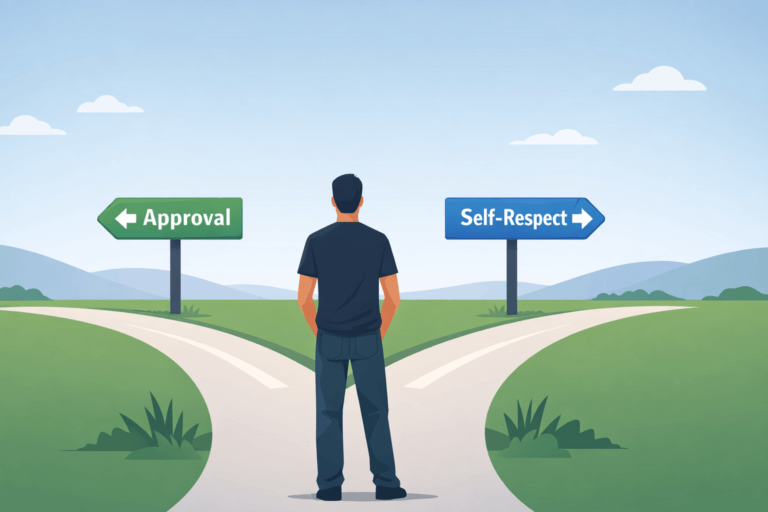
Nice Guy Syndrome in relationships happens when a man prioritises approval over authenticity. He avoids conflict, suppresses his needs, and gives excessively in hopes of earning love. The problem is that this behaviour creates emotional imbalance and predictability, which reduces respect and attraction over time.
Being kind isn’t the issue. Being covertly needy is.
What Nice Guy Syndrome Actually Means
Nice Guy Syndrome is not about being decent.
It’s about being strategic with niceness.
A “nice guy” believes:
If I’m good enough, she’ll never leave.
If I don’t upset her, she’ll stay attracted.
If I give more, I’ll be chosen.
But underneath that behaviour is fear. Fear of rejection. Fear of abandonment. Fear of not being enough.
So instead of showing who he is, he performs what he thinks will be accepted.
Attraction can’t grow in that environment.
Why Nice Guy Syndrome Kills Attraction
Attraction requires polarity, tension, and authenticity.
Nice Guy Syndrome removes all three.
First, there’s no tension. When you agree with everything and never challenge anything, there’s no emotional contrast. It feels flat.
Second, there’s no mystery. If she can predict every response, every opinion, every move — the relationship becomes safe but uninspiring.
Third, there’s no strength signal. Suppressing your needs to keep the peace reads as insecurity, not kindness.
Over time, she doesn’t feel chosen. She feels managed.
That shift is subtle. But it’s powerful.
The Signs You’re Operating from Nice Guy Syndrome
You apologise even when you’re not wrong.
You avoid hard conversations because you don’t want to “rock the boat.”
You secretly resent how much you give.
You hope she notices your sacrifices without you asking for anything.
You say “it’s fine” when it isn’t.
None of this feels manipulative. It feels loving.
But it builds quiet resentment — and resentment always leaks out.
Why It Starts in the First Place
Most men who fall into Nice Guy Syndrome weren’t trying to manipulate anyone.
They were trying to survive emotionally.
If you learned that approval equals safety, you probably became agreeable early in life.
Maybe conflict meant rejection.
Maybe expressing anger led to punishment.
Maybe your needs were dismissed.
So you adapted.
The problem is, what kept you safe as a boy makes you unattractive as a man.
What Happens to the Relationship Over Time
At first, she feels cared for.
Then she feels comfortable.
Then she feels slightly bored.
Then she starts leading emotionally because you won’t.
Then she loses attraction but can’t quite explain why.
This is when phrases start appearing:
“I just don’t feel the same.”
“I need space.”
“You’re amazing, but…”
It feels sudden.
It isn’t.
It’s accumulated predictability and suppressed masculinity.
How to Break Nice Guy Syndrome Without Becoming a Jerk
The solution isn’t becoming cold or dominant.
It’s becoming honest.
Start with this: say what you actually think.
If you disagree, say it calmly.
If you want something, ask for it directly.
If something bothers you, address it early.
Boundaries increase attraction because they signal self-respect.
You also need to stop giving in ways that are transactional.
If you buy gifts, do it because you want to — not because you hope it secures affection.
And finally, allow discomfort.
If she’s mildly frustrated because you didn’t fold immediately, that’s not danger. That’s polarity.
Common Mistakes Men Make When Fixing This
Swinging too far the other way.
Some men realise they’ve been overly agreeable and suddenly become rigid or combative. That’s insecurity in a different form.
Another mistake is announcing the change dramatically.
You don’t need a speech about “being different now.” Just behave differently.
And don’t confuse indifference with strength. Emotional steadiness attracts. Emotional withdrawal repels.
FAQs
Is Nice Guy Syndrome the same as being a good man?
No. Being a good man means having integrity and kindness without needing approval in return. Nice Guy Syndrome is kindness used as a strategy to avoid rejection.
Can women sense Nice Guy behaviour?
Often, yes. Not consciously as a label — but emotionally. It feels like something is being withheld or managed.
Why do women say they want a nice guy but lose attraction?
Most people want kindness and strength. If kindness replaces strength, attraction drops. It’s not about being less kind. It’s about being grounded and self-directed.
Does this mean I should stop doing things for her?
No. Keep doing thoughtful things. Just remove the hidden contract that she “owes” you love for it.
Can attraction come back after Nice Guy behaviour?
Yes, if authenticity replaces approval-seeking. Attraction responds to emotional strength and clear boundaries.
Is Nice Guy Syndrome caused by low self-esteem?
Often, yes. It usually comes from fear of not being enough rather than genuine generosity.
Conclusion
Nice Guy Syndrome in relationships doesn’t fail because you’re too kind.
It fails because you’re negotiating for love instead of expressing yourself honestly.
Attraction grows when a man is calm, clear, and self-respecting — not when he is constantly adjusting himself to avoid loss.
You don’t need to become harder.
You need to become real.
👉Want to reclaim your life?
Join The Honest Masculine Newsletter, and I’ll send you The Masculine Comeback — a short 7-day reset for men who feel lost and tired of pretending they’re fine.
If that sounds like you, you already know what to do.

If you like my content? Let me know by Buying me a coffee. Thanks 🙂