The one question you cannot ask when someone says they’re getting married is simple:
“Why?”
Not when. Not where. Not who’s invited. Just — why?
And that single word is more dangerous than any prenup.
💍 Why People Really Get Married (And Why Most Reasons Fail)
Picture this. You’re sitting at a dinner table, maybe it’s your sister, maybe it’s a buddy from work, maybe it’s a cousin you haven’t seen in a while. They lean across the table, eyes shining, and drop the news: “I’m getting married.”
The whole table erupts. Glasses clink, hands clap, someone shouts “Finally!” and the conversation instantly shifts to dresses, venues, guest lists, and Instagram hashtags.
But in your head, one word is sitting there like a bullet in the chamber:
Why?
It’s the one question you can’t ask. Not because it’s offensive. Not because it’s mean. But because it cuts through the champagne bubbles and the happy tears and forces someone to stare straight into the truth. And the truth is, most people don’t have an answer. Not a real one.
Ask the average couple and you’ll get one of four scripts.
The first is love. “We’re getting married because we love each other.” It sounds sweet. It photographs well. But love is not a reason — it’s a chemical. A drug. It spikes, it crashes, it changes with time and stress and bills and sleepless nights. Ask the guy living in a one-bedroom apartment after losing his house in a divorce if love was enough. Ask the woman filing restraining orders and trying to co-parent with a man she once swore was her soulmate. Love fades. Commitment doesn’t. But marriage isn’t built on commitment anymore. It’s built on the high of a feeling.
The second script is “it’s time.” Translation: I hit 30. My friends are pairing off. My parents keep asking when it’s my turn. My biological clock is screaming. I’m tired of being the single one at weddings. None of that is conviction. It’s fear in a tuxedo. It’s settling, because the alternative — being alone — feels worse than a gamble. I’ve seen men marry women they weren’t even excited about because they thought they were “out of time.” I’ve seen women say yes to men they didn’t fully respect because they thought “this is as good as it gets.” That’s not destiny. That’s panic.
The third is for the kids. Some people think children will glue them together, like little pieces of living duct tape holding a shaky marriage in place. But kids don’t fix marriages. They expose them. Every crack gets wider. Every fight gets heavier. And then the kids grow up with front-row seats to two people who don’t love each other, pretending they do. It’s not noble. It’s selfish.
And then there’s the autopilot script: “Because it’s what you do.” This is the most honest answer and the most depressing. People get married because society tells them they should. Because it’s the next box to tick after dating, moving in, and buying a dog. It’s tradition dressed up as inevitability. People get married for the same reason lemmings run off cliffs — because everyone else is doing it.
Here’s the hard truth: most people don’t get married out of strength. They get married out of fear. Fear of being alone. Fear of starting over. Fear of missing their shot at “happily ever after.” And fear makes terrible decisions. Fear doesn’t build strong foundations. Fear builds sandcastles that look pretty for a season and wash away with the tide.
That’s why “why” is the loaded gun. Because the second you ask it, the smile drops, the room goes quiet, and the fantasy starts to crack. And once you see the cracks, it’s hard to look away.
🎲 Divorce Statistics Prove the Odds Don’t Care About Your Why
Let’s say you’ve got your “why.” You love each other. You’ve been together long enough. You’re ready to “settle down.” Maybe you even think you’re different. The two of you are special. You’ve got the magic.
That’s cute. But the odds don’t care.
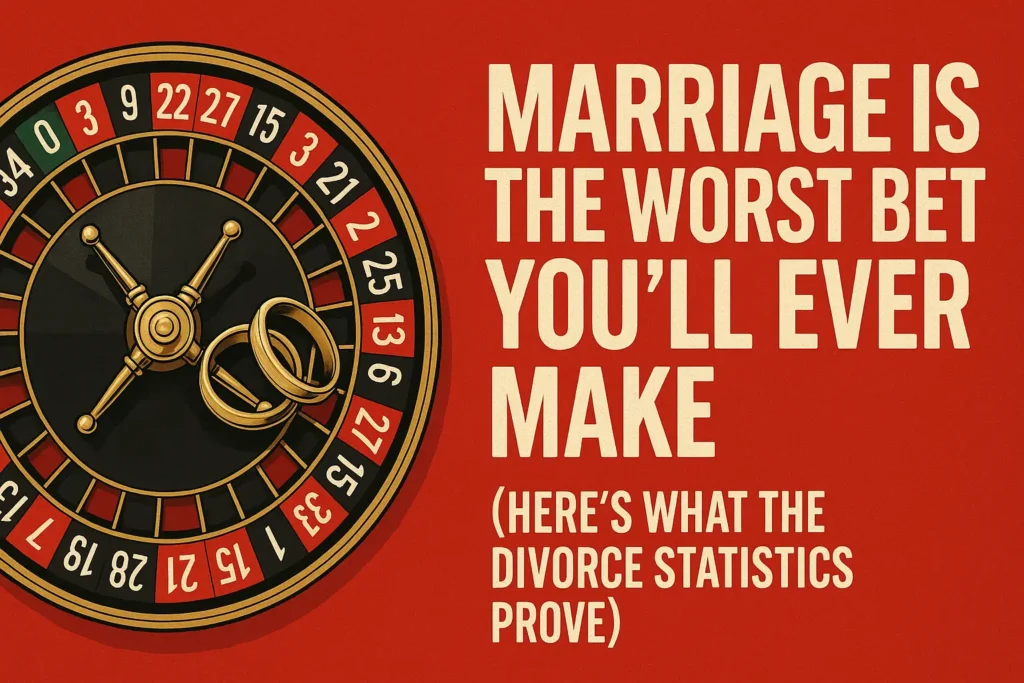
Here’s the truth: marriage isn’t a sacred vow. It’s a gamble. And the casino always has the advantage.
The numbers are brutal. Roughly forty-one percent of first marriages in the U.S. end in divorce. Second marriages? Even worse. More than sixty percent crash and burn. Third marriages? Seventy-three percent. So much for learning from mistakes. If anything, the more times people marry, the more likely they are to fail again. Hope is not experience. It’s a drug.
Even when marriages don’t implode, they don’t usually last a lifetime. The average “successful” marriage stretches to about twenty years. That’s not forever. That’s not even half a lifetime. That’s a long lease with a buyout clause at the end. The average marriage that ends in divorce doesn’t even make it a decade. Eight years. That’s less time than a Honda Civic will run before the engine dies.
You’ve heard the fairytale: marriage is stability. But look at the numbers. Stability is a myth. Marriage is a coin flip dressed up in white lace.
And when you stack marriage against other so-called “risky” things in life, the whole picture collapses.
Start a business and you’ve got a better chance of surviving ten years than you do of surviving a marriage. About sixty-five percent of businesses make it past the decade mark. That’s more than half. Businesses, with all their chaos and competition, are safer than a marriage license.
Go to college and you’ve got about a sixty-four percent chance of graduating. Marriage? Barely fifty percent survive lifelong. Apparently, it’s easier to earn a degree than to stay married.
Buy a house. That house will outlast your marriage. More than sixty-five percent of homeowners keep their homes long term. The roof, the bricks, the mortgage — more durable than “forever.”
Hell, buy a car. The average car in America runs twelve to thirteen years. The average failed marriage runs eight. You’ll get more mileage out of your Toyota than your vows.
And here’s the thing: even the most extreme situations give you better odds than marriage. Open-heart surgery? Ninety-five to ninety-eight percent survival rate. Marriage? Flip a coin. A plane crash? Odds of dying: one in eleven million. Odds of divorce: one in two. You are literally safer flying through a thunderstorm in a steel tube at thirty thousand feet than standing in a chapel saying “I do.”
That’s the part nobody wants to admit. We talk about marriage like it’s a safe bet, like it’s the natural step, like it’s the thing that grounds you. But the data doesn’t lie. The institution is a slot machine rigged against you. You pull the lever, maybe you get a honeymoon, maybe you get a few good years, but sooner or later the house takes its cut.
Even Vegas feels less rigged than the altar. At least in Vegas, you know the odds are stacked against you. At least in Vegas, you can walk away from the table when you’re losing. Marriage? You don’t just lose chips — you lose houses, kids, your peace of mind, and sometimes the best years of your life.
So the next time someone says, “We’re getting married because we’re ready,” remember this: readiness doesn’t matter. Reasons don’t matter. The odds don’t care about your why.
💸 The Real Cost of Marriage: Wedding Debt, Divorce Court, and Financial Ruin
If your “why” is weak, the universe has a way of sending you the bill. And marriage hands out the kind of invoices that don’t just sting — they bleed you dry.
Let’s start with the circus at the beginning: the wedding itself. In the U.S., the average wedding costs nearly forty grand. That’s not a typo. Thirty-eight thousand, seven hundred dollars — for one day. For flowers that wilt in 48 hours, food that’s forgotten in 48 minutes, and photos that eventually get shoved into a drawer. That’s a house down payment. That’s student loans cleared. That’s years of financial breathing room, burned for a party.
The insane part? People don’t even blink. They take out loans, drain savings, max credit cards, all so they can cosplay royalty for 12 hours and post proof to Instagram. And the industry knows it. The “wedding-industrial complex” is one of the most predatory machines on the planet. Venues triple their prices the second they hear the word “wedding.” Florists slap a zero onto the end of their quote. Photographers charge like they’re shooting for Vogue. Because they know — you’ll pay. You’re not thinking rationally. You’re drunk on the fairytale.
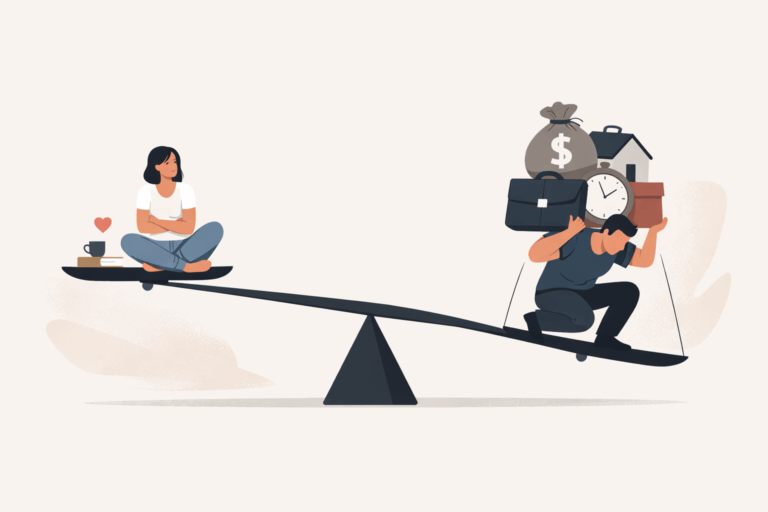
But the real price tag comes later, when the fairy dust settles. Divorce court doesn’t just take your marriage. It takes your life apart, line by line, asset by asset. If you’re a man, you might watch half your paycheck walk out the door every month in alimony and child support. You might watch your kids sleep in another man’s house while you move back into your mother’s basement. You might fight for scraps of custody while lawyers drain your bank account at $400 an hour.
If you’re a woman, the hit is different, but it’s still brutal. Studies show women in “gray divorces” — the ones happening later in life — lose nearly 50% of their standard of living. Men lose about 20%. Either way, the drop is devastating. You don’t just split assets; you split futures. Retirement plans are gutted. Houses are sold. Kids get bounced between households like luggage on a conveyor belt.
And then there’s the emotional bill. You don’t just lose money. You lose years. You lose peace. You lose the version of yourself that thought forever was real. The sleepless nights, the anxiety attacks, the constant mental math of “how do I make this work now?” That’s part of the cost. Nobody puts it in the brochure, but it’s real.
Marriage doesn’t just test your heart. It empties your wallet, crushes your spirit, and rearranges your life in ways you never planned for. And the sickest part? Most of it comes down to a bad “why.” People marry for the wrong reasons, and then spend decades paying off that mistake.
Ask anyone who’s been through it, and you’ll hear the same line: “I didn’t think it would happen to me.” That’s the magic trick marriage plays. It makes you believe you’re the exception. You’re not. The system is designed to win. The lawyers win. The courts win. The industry wins. The only ones who lose are the people who thought “love” or “time” or “tradition” was a strong enough reason to sign their name on that dotted line.
So when you see someone smiling over champagne, flashing their ring, and talking about “forever,” remember this: forever has a price tag. And most people can’t afford it.
🔥 Why Nobody Wants You Asking Why People Get Married
Here’s the thing about the question “why.” It’s simple. It’s clean. It’s one word. But it’s radioactive.
Nobody wants you asking it when someone announces they’re getting married. Not the couple. Not the parents. Not the friends. Not even the strangers who see the engagement post online. Because “why” is a mirror. And mirrors are dangerous when people are selling illusions.
When someone says they’re engaged, there’s a script you’re supposed to follow. You smile. You clap. You congratulate. You don’t question. You don’t poke holes. You don’t ask them to explain the foundation of the biggest gamble of their lives. That would ruin the vibe. And in today’s world, vibe is more important than truth.
Ask “why” at an engagement party and watch what happens. The music keeps playing, but the air changes. The bride-to-be fidgets. The groom laughs nervously. Someone changes the subject. The room does everything it can to smother the silence that follows. Because the silence says what nobody wants to admit: they don’t know.
Society doesn’t like mirrors because they ruin the fantasy. Weddings aren’t about truth; they’re about performance. The dress. The cake. The speeches. The photos. It’s a stage play for family and friends, designed to prove that these two people are “on track.” Marriage is a milestone. It signals you’re normal, you’re stable, you’re doing life the way everyone expects.
But here’s the hard truth: most people aren’t building marriages on solid ground. They’re building on fear and tradition. And asking “why” forces them to confront that. It forces them to realize their big day is less about conviction and more about pressure. Pressure from parents who want grandkids. Pressure from friends who are all married already. Pressure from Instagram feeds that make single life look like failure.
And the second you question it, you become the villain. You’re the cynic. The bitter one. The “commitment-phobic” guy who can’t just let people be happy. Society doesn’t punish people for making bad decisions. It punishes the people who point them out.
That’s why “why” is forbidden. Because it doesn’t just question the couple — it questions the entire culture. It shines a light on the wedding-industrial machine that sells us fantasies at $38,000 a pop. It exposes the myth that marriage equals adulthood, responsibility, stability. It calls out the lie that love is enough to survive bills, boredom, and betrayal.
People don’t want truth. They want applause. They want champagne toasts and Instagram likes. They want the illusion of certainty in a world where nothing is guaranteed. “Why” ruins the party. It kills the high. It strips away the fairytale and leaves people staring at a contract they barely understand.
Ask someone why they’re getting married, and you’ll hear it. Hope disguised as certainty. Fear disguised as destiny. Pressure disguised as purpose. And under all of that, silence. The silence of someone who knows, deep down, they’re rolling dice and calling it forever.
⚡ The Hard Truth About Marriage, Divorce, and Modern Relationships
So let’s strip away the flowers, the music, the speeches, and the champagne. Let’s kill the Instagram filters and the perfect lighting. Let’s put the fantasy in the ground and look at what’s left.
Marriage isn’t a guarantee. It isn’t safety. It isn’t a lifelong promise carved in stone. It’s a gamble. It’s a contract. And it’s one most people sign without reading the fine print.
The reality is ugly. Almost half of first marriages fail. The rest? Many limp along in quiet misery, two strangers raising kids under the same roof, convincing themselves survival counts as success. The average failed marriage doesn’t even last a decade. Eight years — and it’s over. Eight years of bills, fights, compromises, and sacrifices, followed by courtrooms, lawyers, custody battles, and financial wreckage.
The “lucky” ones stretch to twenty years. Think about that for a second. Two decades. That’s the average span of a so-called lifelong commitment. That means if you marry at 28, the odds are your “forever” is over before you hit 50.
People like to believe they’re different. That they’ll beat the odds. That their love is special. But every person who’s ever signed divorce papers once believed the exact same thing. Every man who’s watched his paycheck get carved up for alimony and child support once thought he was marrying “the one.” Every woman who’s found herself back at square one in her 40s or 50s once thought she’d secured stability. Believing you’re the exception doesn’t make you the exception. It makes you the next statistic.
And here’s the worst part: most people don’t even get married for the right reasons. They do it because they’re scared. Scared of being alone. Scared of starting over. Scared of missing their shot at happiness. They do it because their parents keep asking when it’s their turn, because all their friends are posting ring selfies, because tradition tells them they should. They do it because society sells them a fairytale that feels easier to buy than question.
That’s why the question “why?” is so dangerous. Because when you strip away the noise, the reasons collapse. Love? It fades. Time? It runs out. Kids? They expose cracks. Tradition? It’s autopilot, not conviction. What’s left? Fear. And fear makes terrible decisions.
Nobody wants to face that. Nobody wants to admit that their big day is built on shaky ground. They want applause, not accountability. They want champagne toasts, not hard truths. They want likes, not logic. That’s why society hates the question “why.” Because it destroys the fantasy in one syllable.
The truth is brutal: most people don’t get married for strength. They get married to escape weakness. They don’t marry because they’re building something unshakable. They marry because they’re desperate for certainty in a world that doesn’t give any.
And the cost of that desperation? Forty grand for a wedding. Half your assets in divorce. Decades of emotional fallout. Kids caught in the crossfire. A system that strips you down while the lawyers, the courts, and the industry get rich off your hope.
So when someone tells you they’re getting married, don’t ask “why.” You already know the answer. And they don’t want to hear it.
Smile. Nod. Pour the champagne. Let them have their fantasy. Because the truth is, marriage isn’t a promise. It’s the worst bet most people will ever make.
And the house? The house always wins.
If you like my content? Let me know by Buying me a coffee. Thanks 🙂
👉If this resonated, you’ll want more.
Join My Newsletter The Honest Masculine weekly newsletter — and you’ll get instant access to my (Masculine_Future_Manifesto). No fluff, no filters. Just raw truths about breakups, masculinity, fatherhood, and the quiet battles men face alone.
It’s for the man who’s done pretending.