You want to say no without sounding cold.
You want space without starting a fight.
And you definitely don’t want to be labelled “toxic” just for protecting yourself.
Most men struggle with boundaries not because they’re selfish, but because they were never shown how to set them cleanly. What follows is a practical, grounded way to set boundaries without guilt, drama, or unnecessary explanations.
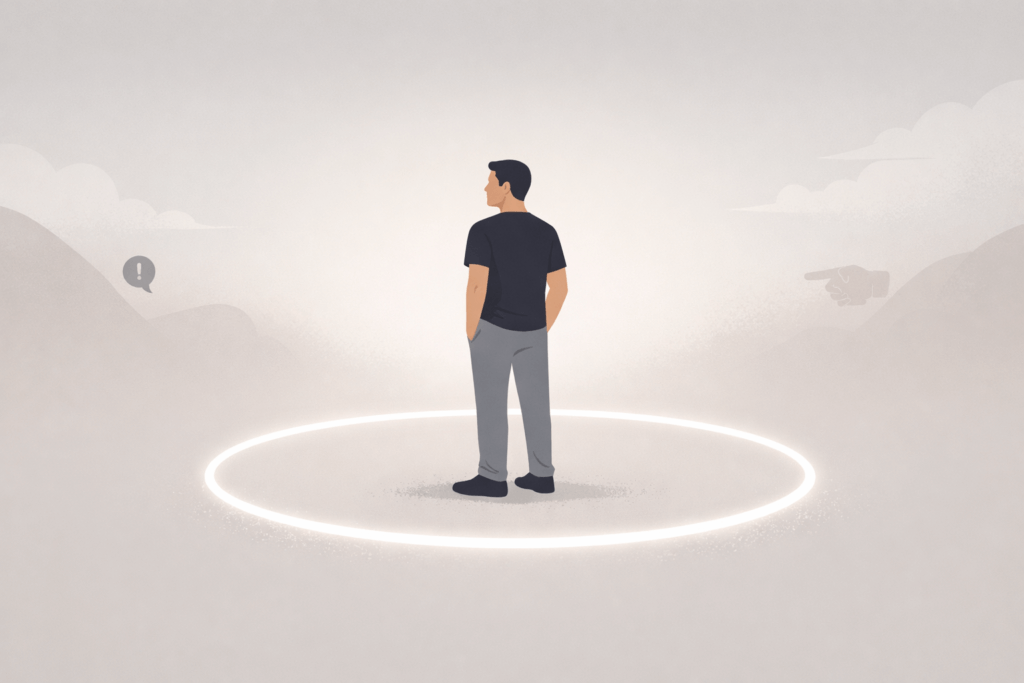
Setting boundaries without feeling toxic means being clear, calm, and consistent without attacking, blaming, or over-explaining. A healthy boundary states what you will or won’t accept, focuses on your actions rather than controlling others, and is enforced through behavior instead of arguments. Boundaries are not punishments. They are filters for how you allow people to treat you.
What Setting Boundaries Actually Means
A boundary is not a threat.
It’s not an ultimatum.
And it’s not you trying to control someone else’s behavior.
A boundary is a personal line that defines what you will participate in and what you will step away from. It’s about your response, not their compliance.
For example, “I’m not continuing this conversation if it turns disrespectful” is a boundary.
“You’re not allowed to talk to me like that” is a demand.
One protects your energy. The other invites conflict.
Why Boundaries Feel “Toxic” to You
Most men associate boundaries with rejection, abandonment, or being “the bad guy.” That usually comes from early conditioning.
If you were praised for being easygoing, agreeable, or self-sacrificing, then asserting a limit now feels like betrayal. You’re not used to choosing yourself without justifying it.
There’s also cultural noise. Online discourse often frames boundaries as either rigid control or narcissism. That creates a false binary. In reality, healthy boundaries are quiet, boring, and deeply un-dramatic.
Feeling uncomfortable doesn’t mean the boundary is wrong. It means it’s new.
The Difference Between Healthy and Toxic Boundaries
A healthy boundary is specific, calm, and behavior-based. It doesn’t require the other person to change. It simply changes your participation.
A toxic boundary is vague, emotionally charged, or used as leverage. It often comes with guilt, withdrawal, or punishment when the other person doesn’t comply.
The key distinction is intent. Are you protecting your time and values, or are you trying to force an outcome?
If your boundary can be stated in one sentence without insults or explanations, you’re usually on solid ground.
How to Set Boundaries Without Guilt
Start by deciding the boundary privately before you communicate it. If you’re still unsure or emotionally charged, you’ll over-explain or backtrack.
Say it once, calmly. No speeches. No courtroom defence. Most boundaries fail because they turn into negotiations.
Use “I” statements that describe your action, not their flaw. “I’m not available for last-minute plans anymore” works better than “You never respect my time.”
Then enforce it quietly. The enforcement is the boundary, not the words.
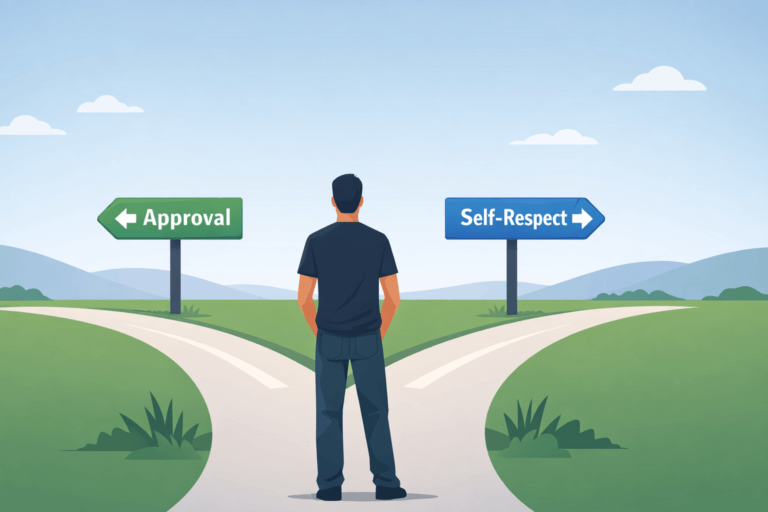
You don’t need permission to protect your time, energy, or self-respect.
What to Do When People Push Back
Some people will test a boundary simply to see if it’s real. That doesn’t mean you set it wrong.
If someone reacts with guilt-tripping, mockery, or accusations of being toxic, stay neutral. Repeat the boundary once if necessary. Then act.
Arguing teaches people that persistence works. Calm follow-through teaches them the boundary is stable.
People who benefit from your lack of boundaries will feel uncomfortable when you change. That discomfort is not your responsibility.
Common Boundary Mistakes Men Make
One mistake is over-explaining. The more you justify, the more it sounds like you’re asking for approval.
Another is setting boundaries only when you’re angry. That creates confusion and emotional whiplash.
A third is setting boundaries without consequences. If nothing changes after the line is crossed, the boundary becomes a suggestion.
Finally, many men confuse distance with boundaries. Disappearing instead of speaking up avoids conflict, but it doesn’t build respect.
FAQs
Are boundaries selfish?
No. Boundaries are a basic requirement for healthy relationships. They prevent resentment and burnout, which ultimately protects both people involved.
Why do I feel guilty after setting a boundary?
Guilt usually comes from conditioning, not wrongdoing. If you were rewarded for compliance in the past, self-protection will feel unfamiliar at first.
Can boundaries push people away?
Yes, but usually the right people stay. Boundaries filter out relationships that rely on over-giving or poor treatment.
How do I set boundaries in dating without killing attraction?
Clear, calm boundaries often increase attraction because they signal self-respect. Neediness and resentment kill attraction far faster than honesty.
What if someone calls me toxic for having boundaries?
That label often appears when someone loses access to you. Stay focused on your behavior, not their interpretation.
Should I explain my boundaries?
Only if explanation adds clarity, not if it’s meant to win approval. A boundary that requires a long defence is rarely enforced.
How long does it take to get comfortable with boundaries?
Discomfort fades with repetition. The first few boundaries feel heavy. Later ones feel neutral.
Are boundaries the same as ultimatums?
No. Ultimatums demand change from others. Boundaries define what you will do if conditions aren’t met.
Conclusion
Setting boundaries without feeling toxic isn’t about finding the perfect wording. It’s about trusting yourself enough to protect your time, energy, and values without apology.
You’re not responsible for managing other people’s reactions.
You are responsible for how you allow yourself to be treated.
If this topic resonates, explore related guides on assertiveness, emotional control, and self-respect to build consistency across your life.
In my full article on Relationships in 2026 I break down the exact scripts men can use to say no without guilt.
👉Want to reclaim your life?
Join My Newsletter The Honest Masculine weekly newsletter — and you’ll get instant access to my (The Masculine Comeback: A 7-Day Reset for Men Who Feel Lost). No fluff, no filters. Just raw truths about breakups, masculinity, fatherhood, and the quiet battles men face alone.
It’s for the man who’s done pretending.

If you like my content? Let me know by Buying me a coffee. Thanks 🙂