Table of Contents
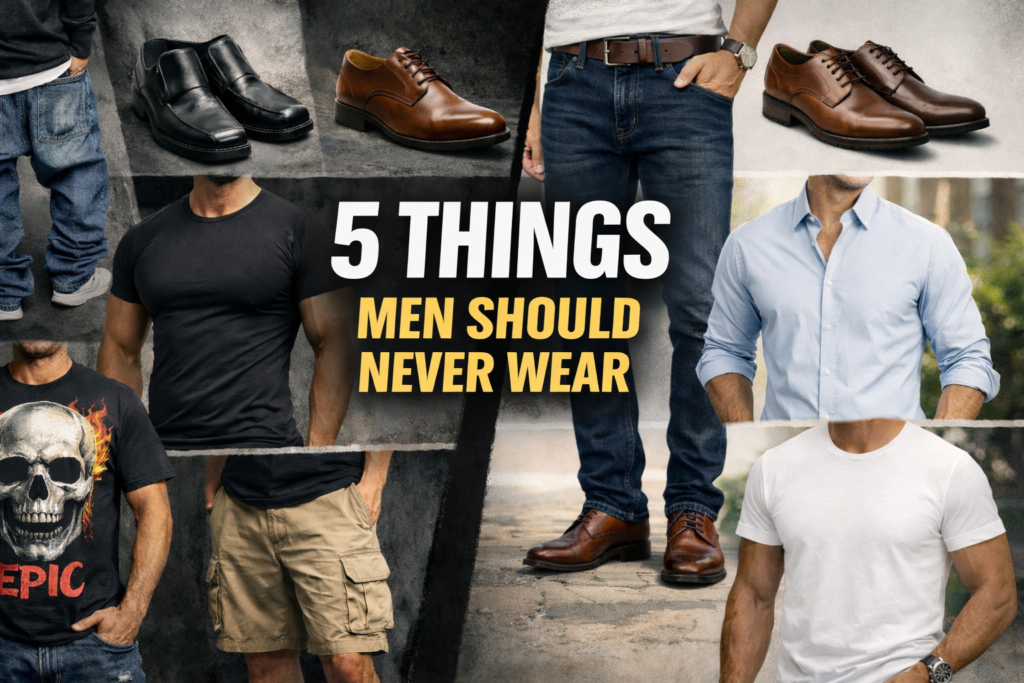
Introduction: 5 Things Men Should Never Wear
Most men don’t need more clothes.
They need fewer mistakes.
Style isn’t about chasing trends, buying expensive brands, or trying to dress like someone on Instagram. In reality, most men look bad for a much simpler reason — they wear a few items that quietly ruin their appearance.
Sometimes it’s a pair of outdated shoes.
Sometimes it’s clothing that fits poorly.
Sometimes it’s something loud that draws attention for the wrong reasons.
The truth is that good style is mostly about restraint.
When you remove the pieces that make you look sloppy, immature, or outdated, everything else in your wardrobe starts working better. Your clothes look cleaner. Your outfits feel more intentional. People notice you instead of the mistake you’re wearing.
The good news is that fixing this doesn’t require a complete wardrobe overhaul.
Often, it just means avoiding a handful of things that almost never work well on a grown man.
Here are five items that are best left out of your closet.
1. Oversized Baggy Jeans
Fit is the foundation of good style. If the fit is wrong, the rest of the outfit rarely works.
Oversized baggy jeans are one of the most common mistakes men make. They hang off the body, bunch at the ankles, and create a silhouette that looks sloppy rather than relaxed.
Years ago this style was popular in certain streetwear trends. But today it tends to make a man look either much younger than he is or completely unaware of how clothes should fit.
The main problem is proportion.
When denim is excessively wide, it hides your natural shape. Your legs appear shorter, your frame looks smaller, and the outfit loses structure. Even a good shirt or jacket can’t fix the imbalance created by overly baggy jeans.
There’s also a difference between comfortable and oversized.
Comfortable jeans allow movement and don’t feel restrictive. Oversized jeans simply add unnecessary fabric that disrupts the entire look.
A better approach is to aim for jeans that follow the shape of your body without squeezing it.
Look for denim that:
- Sits comfortably at the waist
- Falls cleanly through the thigh
- Tapers slightly toward the ankle
- Doesn’t stack excessively at the bottom
For most men, a straight fit or slim-straight fit works well. These cuts create clean lines while still feeling natural and comfortable.
You don’t need to chase trends or wear extremely tight denim to look sharp. The goal is simple: jeans that fit well enough to show your shape without drawing attention to themselves.
When your denim fits properly, the rest of your outfit instantly looks more intentional.
2. Square-Toe Dress Shoes
Shoes anchor an entire outfit. When they look right, everything above them looks better. When they look wrong, the mistake is hard to ignore.
Square-toe dress shoes are one of the most common examples of footwear that quietly ages a man’s style.
They were widely popular in the late 1990s and early 2000s. Many men bought them for work, weddings, or formal occasions, and some of those pairs are still sitting in closets today.
The problem is the shape.
The wide, flat front makes the shoe look bulky and unnatural compared to modern tailoring. Instead of creating a clean line from the trousers down to the foot, square-toe shoes interrupt the silhouette and make the entire outfit appear dated.
Even if the rest of your clothing fits well, this one detail can pull everything backward.
Footwear works best when it feels balanced and refined rather than exaggerated.
A better option is to choose dress shoes with a shape that complements the natural form of the foot.
Look for styles with:
- A round toe
- A slight almond shape
- Smooth leather with minimal decoration
- A clean profile that isn’t overly bulky
These details may seem small, but they make a noticeable difference. Classic shoe shapes have remained consistent for decades because they work with almost any outfit.
When your shoes are simple, well-shaped, and properly maintained, they elevate everything you wear with them.
And unlike trendy pieces, a good pair of classic dress shoes will stay relevant for years.
3. Cargo Shorts
Cargo shorts became popular because they seemed practical. More pockets meant more space to carry things.
But practicality doesn’t always translate into good style.
The extra pockets create bulk around the thighs and sides of the legs. Instead of a clean silhouette, the shorts start to look heavy and cluttered. Even when the rest of your outfit is simple, cargo shorts tend to pull attention toward the mess of pockets.
Length is another issue.
Many cargo shorts fall well below the knee, which shortens the appearance of your legs and makes the entire outfit feel unbalanced. Combined with the loose fit that many pairs have, the result often looks oversized and dated.
This doesn’t mean men shouldn’t wear shorts.
It simply means choosing ones that keep the outfit clean and simple.
A better option is a pair of shorts that:
- Sit a few inches above the knee
- Have a streamlined fit through the thigh
- Feature minimal pockets
- Use simple fabrics and neutral colors
These small details make a big difference. Clean, well-fitting shorts look more intentional and work with a wider range of outfits.
In most situations, less is better. Removing the extra pockets immediately makes your summer clothing look sharper.
4. Overly Tight Shirts
There’s a difference between fitted clothing and tight clothing.
A fitted shirt follows the natural shape of your body. A tight shirt clings to it.
When a shirt is overly tight, it tends to draw attention in the wrong way. The fabric stretches across the chest, pulls around the stomach, and highlights every crease in the material. Instead of looking confident, the outfit often feels forced.
Many men make this mistake because they assume tighter clothing automatically looks better. In reality, clothing that is too tight can make even a good physique look uncomfortable.
It also limits movement and creates tension in the outfit. When fabric pulls across the body, it rarely looks relaxed or natural.
A better approach is to aim for balance.
A well-fitting shirt should:
- Lightly follow the shape of your chest and shoulders
- Leave a little room around the waist
- Allow comfortable movement through the arms
- Sit cleanly without pulling across the fabric
This type of fit highlights your build without trying to exaggerate it.
Even men who spend a lot of time in the gym tend to look better in clothing that leaves a bit of breathing room. The goal is not to show every detail of your body — it’s to create a clean, confident silhouette.
When a shirt fits properly, it looks effortless. And effortless style almost always looks better than something that feels strained or overly tight.
5. Loud Graphic or Slogan Shirts
Clothing that shouts usually ages poorly.
Graphic shirts, oversized logos, and novelty slogans often dominate an outfit in a way that feels distracting rather than stylish. Instead of complementing the person wearing them, they become the entire focus.
This is especially true with shirts that feature jokes, exaggerated branding, or bold graphics across the chest. While they might feel fun or expressive at first, they tend to make an outfit look immature or overly casual.
Another issue is that graphic trends change quickly. What feels current one year can look outdated the next. A shirt built around a specific slogan or logo often has a short lifespan in your wardrobe.
Simple clothing, on the other hand, tends to last much longer.
A plain T-shirt or a shirt with subtle texture allows the rest of your outfit to work together without unnecessary distractions. It also creates a cleaner, more confident appearance.
A better approach is to choose shirts that:
- Use solid, neutral colors
- Feature minimal or no branding
- Have clean lines and simple designs
- Work easily with different outfits
These pieces give you flexibility while maintaining a more refined look.
The goal isn’t to eliminate personality from your clothing. It’s simply to avoid pieces that overwhelm the rest of your style.
Often, the most confident choice is the quiet one.
Final Thoughts
Most men assume improving their style means buying more clothes.
In reality, it usually means wearing fewer of the wrong ones.
When you remove the items that make you look sloppy, outdated, or immature, your wardrobe becomes much easier to manage. The pieces that remain start to work together naturally, and getting dressed becomes simpler.
You don’t need dozens of outfits or expensive brands to look well put together. What matters most is sticking to a few basic principles.
First, pay attention to fit. Clothes that follow the shape of your body almost always look better than items that are too baggy or too tight.
Second, keep things simple. Loud graphics, excessive details, and gimmicky designs tend to distract from your appearance rather than improve it.
Third, choose timeless pieces whenever possible. Clothing that has looked good for decades will likely continue to look good for years to come.
Style doesn’t need to be complicated or trendy.
In many cases, the most confident approach is also the simplest: clean clothes, good fit, and nothing that tries too hard to stand out.
When you focus on those basics, you’ll avoid most of the mistakes that hold men back—and your style will improve without much effort at all.
👉Want to reclaim your life?
Join The Honest Masculine Newsletter, and I’ll send you The Masculine Comeback — a short 7-day reset for men who feel lost and tired of pretending they’re fine.
If that sounds like you, you already know what to do.