
Table of Contents
Introduction
You’ve probably noticed it too.
Fewer men dating. Fewer men marrying. More men disappearing into quiet routines — gym, work, and weekends alone.
And no, it’s not because they’ve turned bitter or antisocial. It’s because they’re done performing.
In 2025, more men are choosing solitude over relationships — not out of hatred toward women, but out of self-preservation. They’ve finally realized peace is worth more than validation.
For years, men were told that being single meant something was wrong with them. That solitude was shameful, even dangerous. The message was clear: a man without a woman was incomplete.
But reality hit back. Modern relationships stopped feeling like partnerships and started feeling like emotional audits — constant negotiation, endless miscommunication, and a quiet sense of being undervalued.
When love starts to feel like labor, men walk away. Not loudly. Not dramatically. Just quietly… and permanently.
They stop chasing connection that drains them. They stop trying to fix what culture keeps breaking. They trade comfort for clarity — and they don’t look back.
This isn’t a movement with slogans or hashtags. It’s a silent migration — away from relationships that cost too much, toward a life that finally makes sense again.
Because sometimes solitude isn’t loneliness. It’s freedom from noise.
And more men are waking up to that truth every single day.
The Burnout of Modern Relationships
Let’s be real — modern relationships feel more like a second job than a source of connection.
The effort-to-reward ratio is off the charts. Men are bending over backwards to be emotionally available, financially stable, socially aware, and endlessly patient — all while being told it’s still not enough.
They’re expected to communicate like therapists, provide like their grandfathers, and show vulnerability like poets. The standard is perfection. The return? Often emotional inconsistency, criticism, or a cold shoulder.
That’s not love. That’s performance.
So men burn out. Not because they’re weak — but because no one can keep performing when every interaction feels like a test.
There’s this constant pressure to “be better.” Better listener. Better provider. Better man. But better according to whose standards?
Because in today’s culture, masculinity is a moving target — and men are tired of chasing it.
Dating apps amplify that burnout. Every swipe feels like a mini job interview. Every chat feels transactional. And when a man finally does show up as his full self, he’s often ghosted, criticized, or told to “try harder.”
It’s no wonder so many men are quietly checking out.
This isn’t about entitlement — it’s about emotional ROI. Men are realizing they can’t pour from an empty cup, and relationships have become emotional overdrafts.
So they withdraw. Not out of spite, but out of necessity.
Because when connection turns into obligation, and affection turns into performance, solitude starts to look like a luxury.
In 2025, the burnout is real. And for many men, walking away isn’t quitting — it’s healing.
The Cost of Constant Compromise
Most men don’t walk away because of one big fight.
They walk away because of a thousand tiny concessions that quietly hollow them out.
It starts small — letting her win the argument just to keep the peace. Ignoring a disrespectful comment because “she didn’t mean it.” Saying yes when every cell in your body is screaming no.
One day you wake up and realize you’ve bartered your peace for proximity.
Modern men are exhausted, not from confrontation, but from constant self-editing. Every opinion needs a disclaimer. Every truth needs soft edges. You can’t even express a boundary without being accused of being “emotionally unavailable.”
It’s death by a thousand compromises.
Men are natural problem-solvers. When something’s off, we try to fix it. But you can’t fix someone who benefits from your silence. And in too many relationships today, that’s exactly what’s happening — men are punished for their honesty and rewarded for compliance.
So they learn to shut down. To go quiet. To coast.
And eventually, to walk away.
Because you can’t be at peace in a place that constantly demands you abandon yourself.
Choosing to stay single doesn’t mean a man hates relationships. It means he’s finally learned the cost of losing himself for love.
He’s not chasing peace because he’s weak — he’s chasing it because he’s done confusing drama for connection.
Men in 2025 are realizing something ancient and simple: silence, space, and solitude aren’t the enemies of intimacy — they’re the foundations of it.
The man who values peace will never beg for company.
He’ll choose solitude, because it’s the only space left where his thoughts belong entirely to him.
Solitude as rebellion
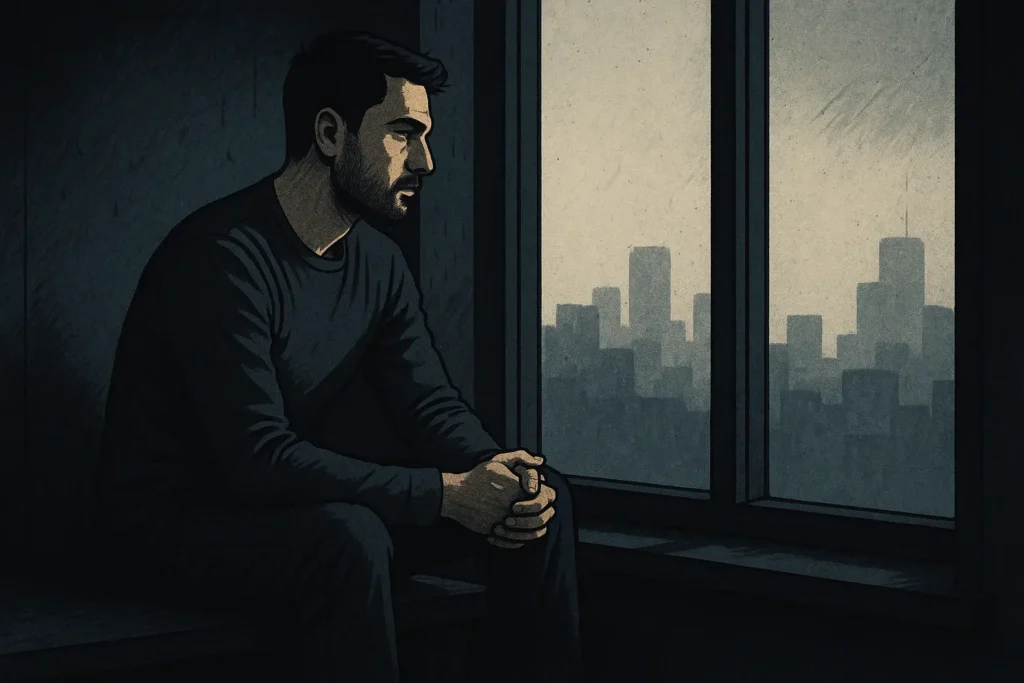
At some point, solitude stops feeling like isolation and starts feeling like rebellion.
Not the angry kind — the quiet, grounded kind that says: I’m done being drained by noise.
See, solitude is the most misunderstood power a man can claim. Society treats it like a disease. “You should get out more,” they say. “You’ll find the right one someday.” But what if he’s not looking? What if he’s finally found something worth keeping — his peace?
In 2025, solitude has become a statement. Men aren’t escaping the world; they’re stepping outside of its chaos. They’re done being emotionally taxed for attention, done proving their worth through constant giving, done apologizing for wanting silence over small talk.
Solitude strips away the lies. It forces you to meet yourself without distraction — no validation, no filters, no audience. And that’s where real self-respect is built.
A man alone learns discipline because there’s no one to do it for him. He learns self-control because no one’s clapping when he succeeds. He learns peace because he finally realizes how much energy he wasted trying to please people who didn’t notice.
Solitude is rebellion because it breaks the loop — the one where men sacrifice identity for acceptance.
When a man chooses solitude, he’s no longer reacting to the world; he’s building from within it. He becomes dangerous in the best way — calm, focused, detached from validation.
That’s the kind of man who can’t be manipulated. You can’t guilt him, flatter him, or control him. He’s not waiting for permission anymore.
And that’s why solitude scares people. It’s not loneliness — it’s liberation.
What this means for masculinity in 2025
Masculinity isn’t dying — it’s evolving. And solitude is becoming its new foundation.
For decades, men were told to express more emotion, be more understanding, communicate more. Fair. But nobody told them what to do when their vulnerability was mocked, weaponized, or dismissed. Nobody gave them the tools to balance softness with strength.
So men started doing what they’ve always done when the world stops making sense: they went inward.
The solitude movement is that inward turn. It’s not about abandoning relationships — it’s about rediscovering sovereignty. When a man removes the constant noise of expectation, he starts hearing his own voice again.
That’s when he starts training again. Reading again. Working on his craft again. Not for approval — for alignment.
Modern masculinity in 2025 isn’t built on dominance or submission. It’s built on discipline. On restraint. On the ability to sit in silence without needing external validation.
These men aren’t “checking out.” They’re checking back in — to themselves, their purpose, and their standards.
The irony is, once a man learns to be alone, he becomes more capable of love. Because real love can only come from wholeness, not dependency.
We’re seeing a generational reset — men rejecting the emotional chaos of performative relationships and returning to something ancient: stillness, mission, brotherhood, and peace.
This isn’t toxic. It’s necessary.
Because the man who can be alone doesn’t need to dominate anyone. He doesn’t need to be validated or rescued. He doesn’t need to prove his worth through a relationship.
He’s grounded, self-led, and quietly powerful.
Masculinity in 2025 is no longer about conquering the world. It’s about mastering yourself so the world no longer conquers you.
final truth-bomb
He’s not avoiding love — he’s avoiding self-betrayal.
The modern man isn’t walking away from women. He’s walking away from the versions of himself he had to become to keep them.
Solitude isn’t a symptom of bitterness; it’s the result of boundaries. It’s what happens when a man finally decides that peace is more valuable than partnership built on pretense.
So if you see a man eating alone, training alone, reading alone — don’t pity him. He’s rebuilding.
In 2025, men choosing solitude aren’t lost. They’re leading a quiet revolution — one built not on anger, but on ownership.
The strongest men today aren’t loud. They’re grounded, disciplined, and uninterested in noise.
They’re not lonely. They’re becoming.
FAQ
1. Why are so many men avoiding relationships in 2025?
Because the emotional return on investment has collapsed. Many men feel drained by relationships that lack respect or reciprocity, so they’re focusing on peace and self-growth instead.
2. Is solitude good or bad for men?
Healthy solitude is powerful. It forces reflection, builds discipline, and resets emotional balance. Chronic isolation is harmful — but intentional solitude heals.
3. Are men giving up on love entirely?
No. They’re giving up on the version of love that demands self-abandonment. When men rediscover peace, they approach love from strength, not desperation.
4. What’s driving the solitude movement?
A cultural burnout. Constant noise, shallow connections, and unrealistic expectations are pushing men to unplug and rebuild quietly.
5. How can solitude make a man stronger?
It eliminates distraction. It sharpens focus. It helps a man rebuild confidence, standards, and purpose without external validation.
👉Want to reclaim your life?
Join My Newsletter The Honest Masculine weekly newsletter — and you’ll get instant access to my (The Masculine Comeback: A 7-Day Reset for Men Who Feel Lost). No fluff, no filters. Just raw truths about breakups, masculinity, fatherhood, and the quiet battles men face alone.
It’s for the man who’s done pretending.

If you like my content? Let me know by Buying me a coffee. Thanks 🙂


[…] a moment in every relationship where a man crosses a silent […]